
Lisbon's Highlights
The first-visit route in one guide: Belém Tower, Jerónimos, the riverside, Tram 28, Alfama, São Jorge Castle, Rossio and Avenida da Liberdade.
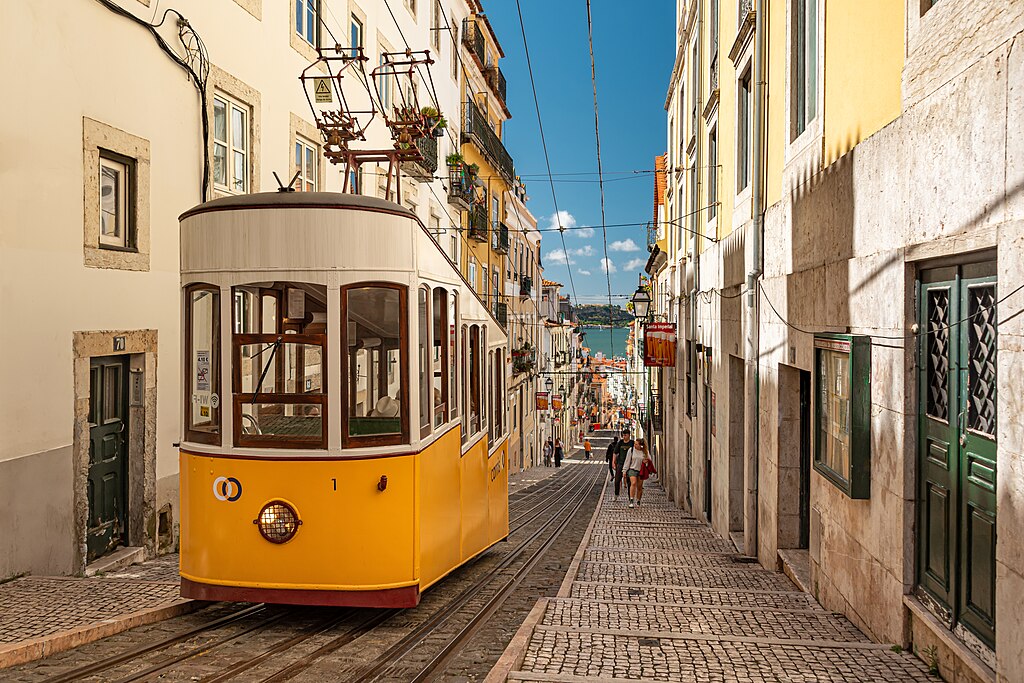
Lisbon · Portugal · Updated October 2026
28 self-guided audio tours for Lisbon: neighbourhood walks, monuments, museums and the stories behind them. Play them on your phone, walk at your own pace, and ask the guide anything along the way.
Start here
Not sure where to begin? These cover the city's best-known places. Press play to hear how the first stop sounds.
The first-visit route in one guide: Belém Tower, Jerónimos, the riverside, Tram 28, Alfama, São Jorge Castle, Rossio and Avenida da Liberdade.
Up the stairs of Alfama to the Santa Luzia viewpoint and São Jorge Castle, past the Sé, the narrow becos and the corners where fado was born.
The portals, the royal tombs, the vault and columns, the cloister and the refectory of Lisbon's great Manueline monastery.
All guides
28 guides and 65 language versions. The letters on each card open the guide in that language.
The first-visit route in one guide: Belém Tower, Jerónimos, the riverside, Tram 28, Alfama, São Jorge Castle, Rossio and Avenida da Liberdade.
A companion more than a walk: your first 24 hours, getting around the seven hills, the neighbourhoods, food, fado, local customs and day trips.
Ride the 28 from Martim Moniz through Graça, Alfama, Baixa, Chiado and Estrela to Prazeres Cemetery, with a story for each stretch of the line.
Up the stairs of Alfama to the Santa Luzia viewpoint and São Jorge Castle, past the Sé, the narrow becos and the corners where fado was born.
From Praça do Comércio and the Rua Augusta arch to Rossio, the Santa Justa lift, Carmo, Bertrand bookstore, A Brasileira and Camões square.
The Santa Catarina viewpoint, the Bica funicular, fado houses, São Roque church, street art and the tascas of the old upper town.
The quiet hill of palaces and embassies: Estrela Basilica, the Trinas convent, Rua do Sacramento and a tiled house you will not forget.
Expo '98 and after: Oriente station, the Portugal Pavilion, the Oceanário, the water gardens and the view of the Vasco da Gama Bridge.
The portals, the royal tombs, the vault and columns, the cloister and the refectory of Lisbon's great Manueline monastery.
Lisbon's cathedral from the Romanesque nave to the cloister, the treasury, the baptistery and the chapel of São Vicente.
The roofless Gothic church left by the 1755 earthquake, its archaeological museum, and the square where the 1974 revolution played out.
São Roque, Loreto, Encarnação, Mártires and Sacramento: five churches within a few streets, and what 1755 did to them.
A church marked by the Inquisition, the 1506 massacre and a great fire, still standing with its scars beside Rossio.
A plain Jesuit façade hiding a painted wooden ceiling, the chapel of São João Batista and a collection of sacred art.
Santa Engrácia, the church that took centuries to finish, now Portugal's National Pantheon, beside Campo de Santa Clara.
From Philip II's 16th-century coach to the triumphal coaches of João V's 1716 embassy to Rome and the mail coach.
A palace, a private collection and a contemporary museum: Almada Negreiros, exile and abstraction, the garden and the chapel that became a bar.
The Battle Room, the tiled Terrace of the Liberal Arts, the Gallery of Kings and the gardens of a 17th-century palace.
A collector's house museum: the private chapel, the Louis XIV room, Napoleon's tea service and the clock collection.
Lisbon's city museum: Roman Olisipo, Moorish and Christian Lisbon, the great model of the city before 1755, and gardens with peacocks.
Portugal's tile story, from the National Tile Museum and Madre de Deus to the Viúva Lamego factory and the art of the Metro.
1 November 1755 and what came after: Praça do Comércio, the new Baixa, the Carmo ruins, São Domingos, the Sé and Alfama.
Why a small country sailed for the world: the Padrão dos Descobrimentos, Belém Tower, the caravel, Jerónimos and Praça do Comércio.
Where fado comes from, Amália Rodrigues, saudade, the Portuguese guitar, and how to behave in a fado house. Listen before your evening out.
Fourteen walls and works: Vhils' Amália portrait in stone, Shepard Fairey's Carnation Revolution mural, Bordalo II and more.
Follow Alexandre Farto's carved portraits across the city, from Alfama and Graça to Monsanto and Braço de Prata.
Tinned fish, the sea on every plate, convent sweets, bifanas, ginjinha, wine beyond port, the tasca and the pastel de nata.
An honest look at how tourism is changing Lisbon, from Alfama and Bairro Alto to LX Factory, Alvalade, Arroios and Marvila.
By area
Where each guide takes you, so you can plan by part of town.
Lisbon's oldest quarter keeps its medieval street plan and came through the 1755 earthquake better than the flat downtown. São Jorge Castle sits on the hilltop above it.
After 1755 the Marquis of Pombal rebuilt the Baixa on a grid of straight streets. Chiado, the old café and bookshop district above it, was rebuilt again after the fire of 1988.
Laid out in the 16th century, the upper town is quiet by day and busy at night. The Bica funicular climbs the steep street below it.
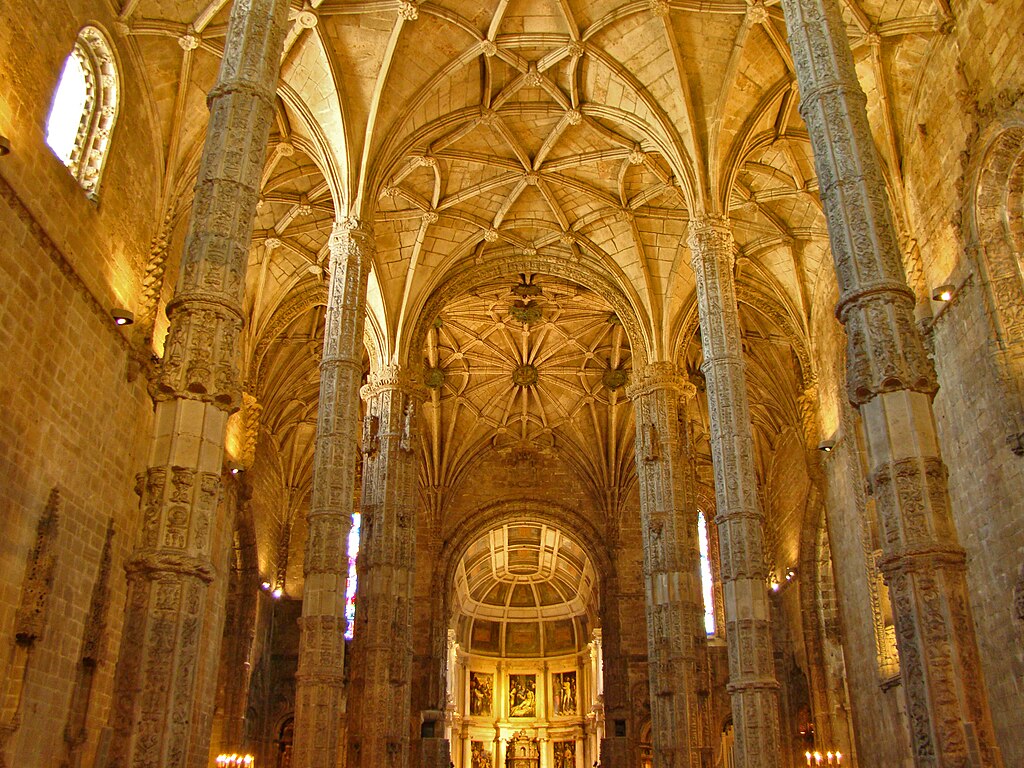
The riverside district where the ships of the Discoveries set out. The Jerónimos Monastery and Belém Tower have been UNESCO World Heritage since 1983.
A hillside of palaces, embassies and quiet streets, crowned by the white dome of Estrela Basilica.
Built for Expo '98 on former industrial land on the eastern riverfront, with the Oceanário and the long Vasco da Gama Bridge.
Plan your visit
A simple plan that keeps each day in one part of town, so you walk more and travel less.
Got a fourth day? Take the train to Sintra: we have 13 guides for its palaces and gardens. See the Sintra guides →
Lisbon is built on steep hills, and the stone pavements get slippery, especially when wet.
Download your guides over Wi-Fi. They play outdoors with GPS and no mobile data.
The 28 gets crowded in the middle of the day. An early ride is calmer, and the guide works from the street too.
Use one earbud in busy streets so you can hear trams and traffic.
History
The short version. Each moment links to the guide that tells it on the spot.
The first king of Portugal captures the city with the help of crusaders, and work begins on the cathedral.
Hear it: Sé de Lisboa: the cathedral →His fleet leaves the Tagus and reaches India the following year. The spice trade makes Lisbon rich.
Hear it: Route of the Portuguese Discoveries →King Manuel I builds the monastery in Belém in the style later named after him, Manueline.
Hear it: Jerónimos Monastery →On 1 November an earthquake, a tsunami and days of fire destroy much of the city.
Hear it: 1755 Lisbon Earthquake →The Marquis of Pombal rebuilds downtown on a grid, with buildings designed to resist the next quake.
Hear it: Baixa & Chiado →On 25 April a nearly bloodless coup ends the dictatorship. Its last act plays out in Largo do Carmo.
Hear it: Convento do Carmo →The world exhibition turns the eastern riverfront into a new district, Parque das Nações.
Hear it: Parque das Nações →FAQ
Yes. GuideSofia has 28 self-guided audio tours for Lisbon. You play them on your own phone in the GuideSofia app and walk at your own pace.
Yes. Download your itinerary and audio guides over Wi-Fi, then use them outdoors with GPS without spending mobile data.
The guides on this page are published in English, Portuguese, Spanish, French, German and Italian. Each card shows which languages that guide has. In the app, the guide is narrated in 30+ languages.
The GuideSofia app is free to download, and it's free to start your first tour.
If it's your first visit, start with Lisbon's Highlights. If you only have one morning, take Castelo and Alfama: it covers the castle, the cathedral and the oldest streets in the city.
Three days is enough to walk the main guides without rushing: Baixa, Chiado and Alfama on day one, Belém on day two, and Tram 28 or Bairro Alto on day three. Add a day if you want to go to Sintra.
Yes. Open the chat in the app and ask about what you are looking at, local history, food or nearby places.
Download GuideSofia, pick a guide and start walking. It's free to start your first tour.
.jpg)
.jpg)
.jpg)


.jpg)


.jpg)
.jpg)
.jpg)


.jpg)
.jpg)

_(2).jpg)


.jpg)


_(26160443571).jpg)


