WHY ON EARTH PORTUGAL?
The Portuguese Discoveries.
The Story of How a Country the Size of an Egg Decided to Dominate the Planet
While other European nations were still battling to see who had the tallest, pointiest castle, Portugal was already planning history's first global empire, proving that size doesn't matter, but nautical audacity does.
WHY ON EARTH PORTUGAL?
A valid question. How did a small country on Europe's edge, squeezed between Spain and the ocean, become globalization's pioneer? Short answer: location, desperation, and advanced mathematics.
Portugal was the medieval equivalent of a teenager with privileged access to their parents' car. Positioned at Europe's southwestern edge, the Portuguese woke up daily looking at the Atlantic wondering "what's out there?" While Spaniards were busy expelling Moors, the Portuguese were building ships.
There was also the economic detail: Asian trade was controlled by Venetians and Arabs, who sold pepper at absurd prices to Europeans, creating the first spice cartel. Portugal decided to bypass this blockade and go straight to the source. Basically, global exploration began because of food seasoning.
THE PROTAGONISTS.
First came Infante Dom Henrique, known as "Henrique the Navigator," despite having navigated approximately never. He was more "Henrique: the Maritime Startup Investor." From his base in Sagres, he funded expeditions, created a navigation school, and was essentially the 15th century's Elon Musk, just more successful and with fewer controversial tweets.
Then came Bartolomeu Dias,, who rounded the Cape of Storms in 1488, later renamed Cape of Good Hope because "Storms" was terrible for tourism. He was the first European to sail into the Indian Ocean from the Atlantic, proving it was possible to reach Asia without crossing Arab territory or walking across Europe.
The great protagonist is Vasco da Gama, who reached India in 1498 on history's most profitable voyage. When he returned, the spices in his hold were worth 60 times the expedition's cost.
And who could forget Pedro Álvares Cabral? In 1500, he "discovered" Brazil while sailing to India, in possibly history's most successful "wrong turn." The official version claims it was planned, but he was trying to take a wider curve around Africa and ended up colliding with another continent.
The Portuguese were the first Europeans to set foot in most corners of the planet. They established trading posts from West Africa to China, from the Middle East to Japan. In 1557, they conquered Macau, keeping this possession until 1999.
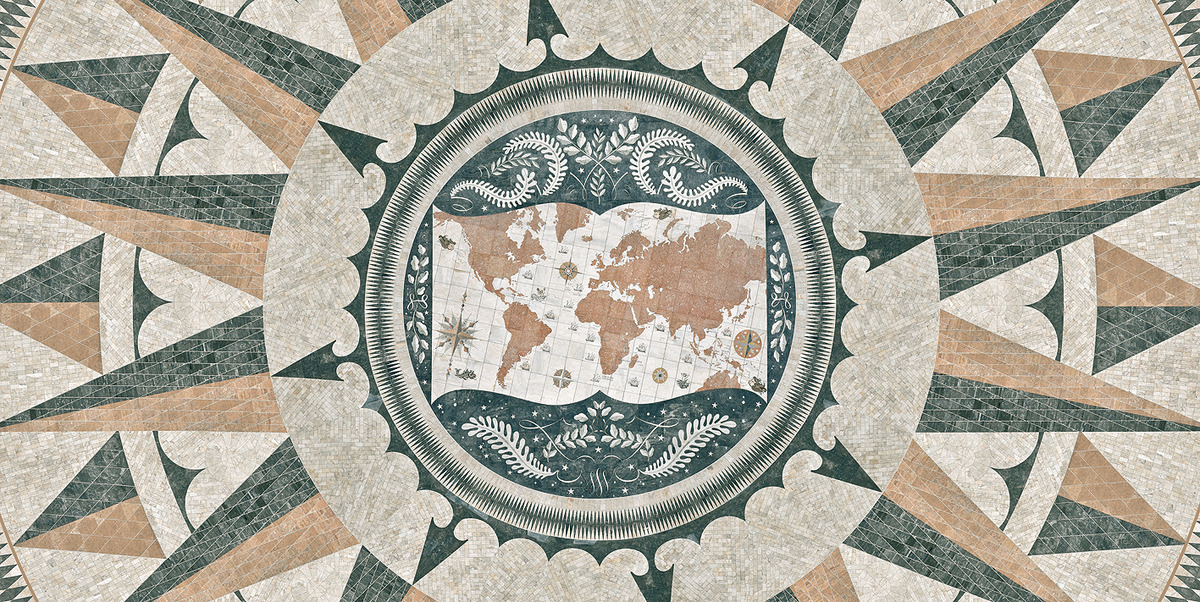
Besides opening new trade routes, Portugal revolutionized navigation. They used Arab mathematics, Mediterranean cartography, and Nordic shipbuilding techniques, mixed everything together and mastered history's first GPS: the nautical astrolabe. It was like an analog app that told where you were based on the stars.
They also introduced the caravel, the 15th century's spacecraft. Agile, fast, and capable of sailing against the wind, it allowed the Portuguese to go places no one else could reach.
Even more impressive: they did all this without Google Maps, antibiotics, or decent coffee. Imagine navigating into the unknown using only the stars and a partially filled map with sea monsters drawn in the empty parts, and a footnote saying Hic sunt dracones - Here be dragons.
This was the era when a tiny country momentarily dominated global trade, redefined maps, and connected cultures that didn't know of each other's existence. An era when the Portuguese had more self-confidence than all European nations combined – and the monuments we'll visit are architectural compensation projects to ensure no one ever forgets.
Now, follow me and prepare for an overdose of Manueline ostentation, as we explore the monuments Portugal built to tell the world: "Yes, we did all this."
Listen to the audio guide: