The Majestic: Where the Mob Lived
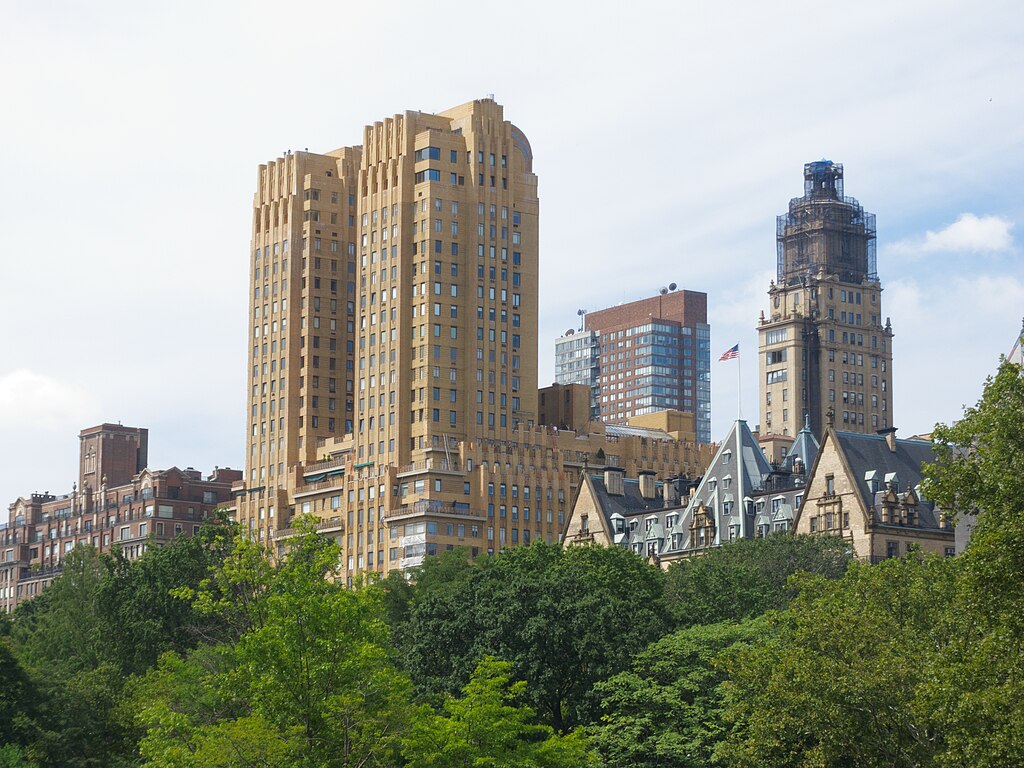
Look at those corner windows wrapping around the building.
No columns interrupting the glass at the corners. That was genuinely advanced engineering in 1931. The architects called these corner sections "solaria," and they cost extra. Now look at the lobby. See that wall panel that looks slightly different from the rest?
That's covering bullet damage from May 2nd, 1957, when Vincent "The Chin" Gigante tried to kill Frank Costello right here.
The Majestic at 115 Central Park West was mob headquarters. Lucky Luciano, Frank Costello, and Meyer Lansky all lived here at the same time. This wasn't hiding.
This was the Genovese crime family operating in plain sight in one of Manhattan's most prestigious addresses. Costello's apartment was 18F. He had a gold-plated grand piano surrounded by slot machines rigged to pay out jackpots perpetually.
Wiretaps caught a New York Supreme Court Justice pledging "undying loyalty" to Costello. That's the level of power we're talking about.
So when Gigante ambushed Costello in this lobby, screaming "This is for you, Frank!" and shot him in the head, the story should have ended there. Except the bullet grazed Costello's scalp and rode around the rim of his hat instead of entering his skull.
By extraordinary luck, Costello survived. He negotiated peace with his rival Vito Genovese and kept living at the Majestic until he died of natural causes in 1973. The man got shot in the head in his own lobby and just went back upstairs.
The building also employed Bruno Richard Hauptmann as a carpenter in 1932. He was making $100 a month here right around when the Lindbergh baby was kidnapped. Hauptmann was later convicted and executed for that kidnapping. So the Majestic has the distinction of housing organized crime leadership and the most infamous kidnapper in American history at the same time. Built between 1930 and 1931 by the same developers doing the other Central Park West towers, the Majestic rises 29 to 31 stories depending on which section you're counting.
The twin towers follow the same pattern as the San Remo and the Eldorado. It's the signature silhouette of this neighborhood. What's different is who chose to live here and what they did with the privilege.
The building went co-op like the others. The mob guys are long gone, replaced by the kind of wealthy people who don't make headlines.
But that lobby wall is still patched. The slot machines are gone. The wiretaps are archived. And Frank Costello's apartment, where he recovered from being shot in the head, probably has new owners who have no idea they're sleeping in the same bedroom where one of America's most powerful mobsters planned his next move after surviving an assassination attempt. The Majestic keeps its secrets better now, but they're still here if you know where to look.
Listen to the audio guide: