The Village That Became a Parking Lot
Humaliwo, malibu
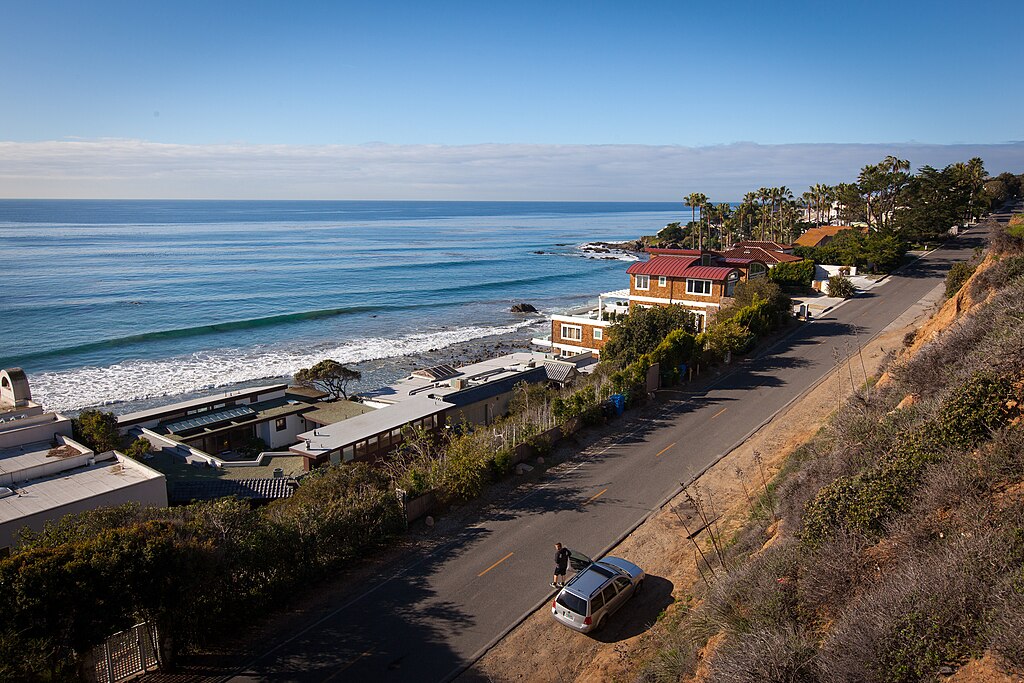
Look at the lagoon in front of you. The water's probably murky, maybe a little greenish. Not exactly what you'd call pristine. But here's what you need to know: you're standing on top of one of the oldest continuously inhabited sites in North America. For at least 7,000 years, maybe 13,000, this was Humaliwo. The name means "where the surf sounds loudly." Listen for a second. The Chumash who named it weren't being poetic, they were being accurate.
By the time Spanish ships showed up in 1542, somewhere between 22,000 and 25,000 Chumash lived in about 150 villages stretching from here to Paso Robles. Juan Rodriguez Cabrillo anchored right here in October that year and called it Pueblo de las Canoas, the Town of the Canoes, because the shore was lined with them. The Chumash built oceangoing plank canoes called tomols, sewn together with milkweed cordage and waterproofed with tar from natural seeps. They could carry a dozen people 25 miles to the Channel Islands and back.
Then the missions came. By 1832, only 2,259 Chumash remained in the five Franciscan missions built on their land. The math was brutal: infant mortality ran at two-thirds dead before age five. Death rate of 78 per thousand versus a birth rate of 41 per thousand. That's not sustainable, that's extinction by spreadsheet. By 1900, only 200 Chumash people survived. An 85 percent population collapse.
Today, there's a Chumash cultural site at Nicholas Canyon Beach, four acres with traditional dwellings for demonstrations. One band has federal recognition. The rest exist in a legal gray zone, their ancestors' 7,000 square miles reduced to tourist education. This lagoon got listed on the National Register of Historic Places in 1976, which is nice, but it doesn't change the fact that the water quality here has been terrible for decades. Runoff, sewage, diverted channels. In 1969, this was the site of one of the first major environmental disasters caused by waste in Southern California.
So yeah, the surf still sounds loudly. But Humaliwo is gone. What's left is a polluted lagoon, a historical marker, and a parking lot where thousands of years of civilization used to be.
Listen to the audio guide: