The Courtyard of Orange Trees
Picture this: it's 785 CE, and Abd al-Rahman I, last survivor of the butchered Umayyad dynasty, is having the kind of dream that changes architectural history. An angel appears demanding to know what he's done for Allah lately. The answer? Build Europe's most ambitious mosque on the site of a demolished Visigothic church.
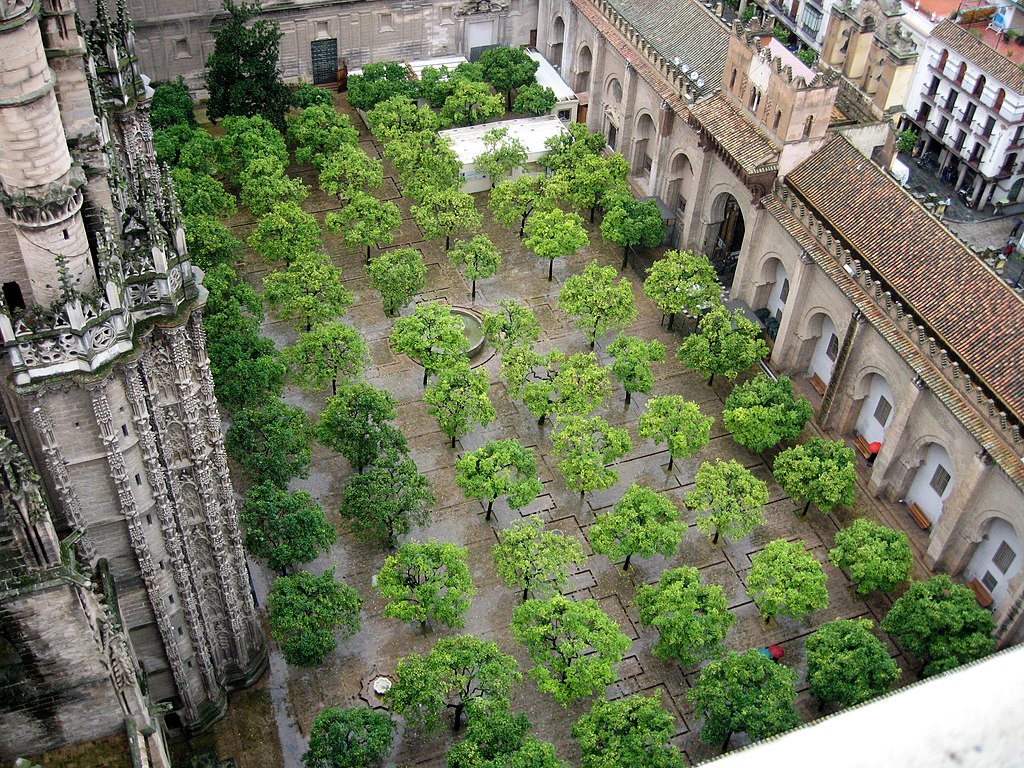
But first, you need a proper courtyard, because Islamic tradition demands ritual purification before prayer. What you're standing in is the world's oldest continuously maintained Islamic garden, where sophisticated 9th-century hydraulics once channeled water through geometric channels to fountain basins. The medieval plumbing is still there, hidden beneath those Renaissance fountain additions that look suspiciously like baroque wedding cakes.
Those orange trees aren't just pretty landscaping. They're living archaeology, some dating back over a thousand years, making this Europe's oldest Islamic garden. The spacing isn't random either. Each tree aligns perfectly with the mosque's interior columns, creating what architects call a "forest effect" that originally flowed seamlessly from garden to prayer hall through nineteen open archways. Imagine 40,000 worshippers moving between sun-dappled courtyard and the red-striped arcade beyond, experiencing one continuous sacred space.
The genius was in the proportions. This courtyard mirrors the prayer hall's dimensions exactly, demonstrating Islamic architectural principles that Europeans wouldn't understand for centuries. While medieval Christians built churches as enclosed fortresses of faith, Muslims created flowing spaces where interior and exterior breathed together.
Local folklore adds its own layer to the story. Unmarried women still drink from the fountain spout nearest the olive tree, believing it guarantees marriage within a year. The tradition survives despite eight centuries of Christian rule, because some things transcend religious conquest.
Abd al-Rahman earned his nickname "The Falcon of the Quraish" through sheer survival instinct. When Abbasids slaughtered his entire family in Damascus, he fled across North Africa, swam the Strait of Gibraltar, and carved out an emirate in hostile territory. Building this mosque wasn't just religious devotion, it was political theater. He needed to prove that Umayyad architectural sophistication could flourish in exile, rivaling the mosques of Baghdad and Damascus.
The courtyard's ablution fountains served practical and spiritual purposes. Islamic law requires purification before prayer, but these weren't simple washbasins. The system channeled water through geometric patterns that reflected paradise garden descriptions in the Quran. Worshippers literally moved through symbolic paradise before entering the sacred space.
Today's Renaissance fountains hide this medieval infrastructure, but you can still trace the original water channels if you know where to look. Christian conquerors preserved the garden because it was simply too beautiful to destroy, though they added those aggressively baroque fountain elements that announce Christian ownership in marble and bronze.
The orange trees continue their ancient cycle, dropping fruit that locals collect for marmalade, maintaining a connection to the garden's agricultural purpose when this courtyard fed both body and soul in medieval Córdoba.
Listen to the audio guide: