Ourense's Original Hot Tub
As Burgas
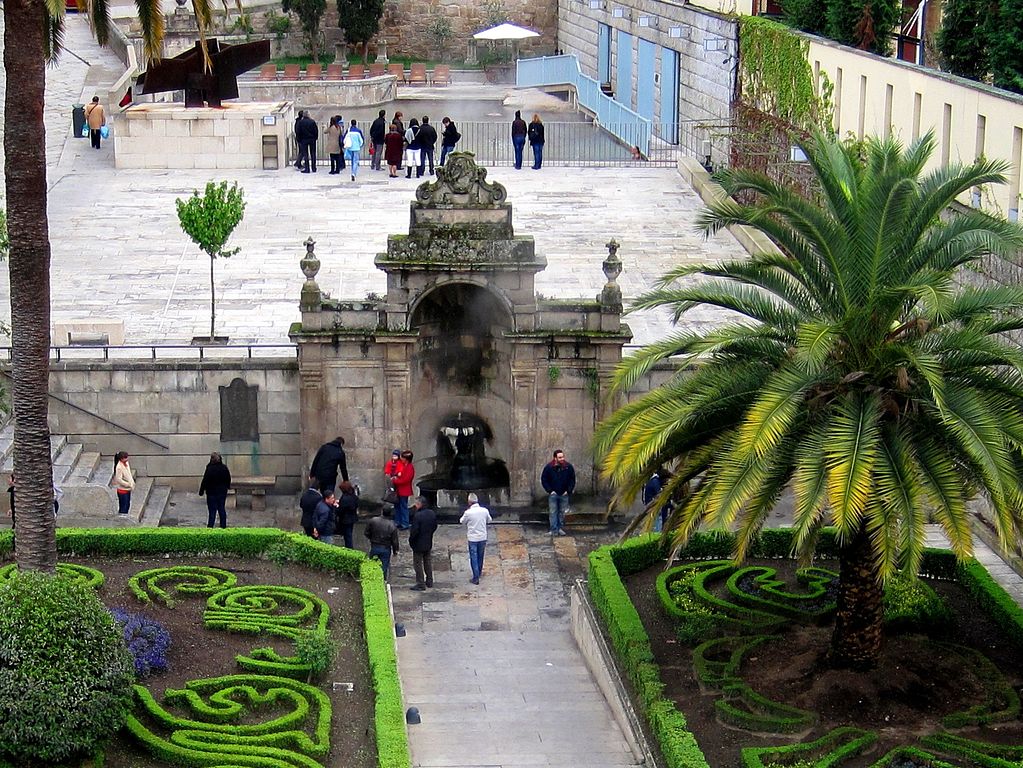
You’re standing at the very reason Ourense exists. Long before it was a city, it was Aquis Auriensis—the Waters of Gold—a name the Romans gave this spot two thousand years ago because of the treasure bubbling up from the ground. This isn't just any hot spring; it's one of Europe's most significant geothermal sites, with water gushing from the granite at nearly boiling temperatures.
The Romans, masters of the spa day, knew a good thing when they saw it. They built a bathhouse and sanctuary here in the 1st century AD, the remains of which you can still see. But they weren't the first. Votive stones found on site are dedicated to
Revve Anabaraego, a local pre-Roman water god, proving that people have been worshipping these springs since before recorded history. The Romans just gave it better plumbing.
Over the centuries, the springs have been a source of endless legends. One claims the water flows directly from beneath the feet of the Santo Cristo statue in the Cathedral, giving it miraculous properties. A more dramatic tale suggests a dormant volcano sleeps under a nearby mountain, heated by the devil himself. A more romantic local belief promises that anyone who touches the water is destined to marry in Ourense.
The springs you see today are a trio. The Burga de Arriba is the oldest, a 17th-century fountain that once supplied a public washhouse. The more elegant, neoclassical
Burga de Abaixo from the 19th century has become a city symbol. And in the middle of it all is a modern, 200-square-meter thermal pool, free for public use. The scalding water is cooled to a perfect 38-40°C, so you can soak in the middle of the historic quarter, participating in a ritual as old as the city itself.
Listen to the audio guide: