Palace of Contradictions
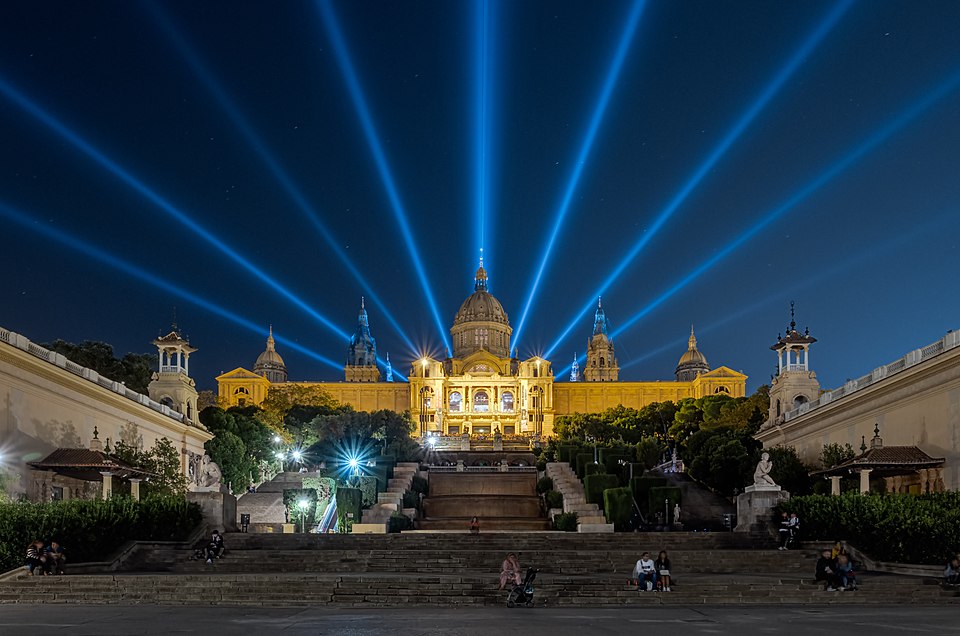
This palace makes absolutely zero architectural sense, and that's precisely why it's perfect. Three different architects working on the same building while strongly disliking each other's ideas? Check. A structure designed to glorify Spanish nationalism that now exclusively celebrates Catalan art? Double check. Nine searchlights that spell out "Barcelona" while consuming a quarter of the city's electricity? Why not, indeed.
The building you're standing in was conceived as the crown jewel of Barcelona's 1929 International Exhibition, meant to announce Spain's triumphant return to the world stage after losing its last colonies. The original architect, Josep Puig i Cadafalch, was unceremoniously dismissed for the perceived issue of being too Catalan. His replacements, Eugenio Cendoya and Enric Catà, delivered exactly what Madrid ordered: a neoclassical monument to Spanish ambitions, complete with that large dome copied from St. Peter's Basilica.
But here's where history gets deliciously ironic. The very building designed to diminish Catalan identity became its greatest shrine. When MNAC opened here in 1990, it transformed this temple to Spanish centralism into the world's definitive museum of Catalan art. Every day, thousands of visitors climb these stairs to discover why Catalonia has spent a thousand years refusing to be absorbed into another's empire.
Those searchlights dominating Barcelona's skyline? They're visible from 100 kilometers away and originally required their own power plant. Local officials swear it's pure coincidence that they can project red and yellow light patterns resembling the Catalan flag, but their smiles suggest otherwise. During the 1992 Olympics, these same lights announced Barcelona to the world, not as a Spanish regional capital, but as a Mediterranean cultural powerhouse.
The building's construction required demolishing Montjuïc's historic military fortress, where Catalan activists had been executed for centuries. This wasn't accidental symbolism but deliberate cultural removal. Yet today, visitors traverse those same grounds to celebrate the artistic culture that survived every attempt at marginalization.
Walk through that tactile model near the entrance. It shows the building's massive scale: 32,000 square meters of exhibition space, more than most European national museums. The central Oval Hall could host a football match if they removed the pipes from that massive organ. This architectural grandeur was supposed to demonstrate Spanish cultural significance but instead created the perfect container for displaying why Catalonia developed its own distinct artistic tradition.
The ultimate paradox stands right here in the foyer. Above you, imperial Spanish symbols carved in stone. Around you, the world's most comprehensive collection of Romanesque art, Gothic masterpieces, and Modernist paintings that document how Catalans spent centuries creating beauty while empires tried to diminish their identity. This building's transformation from a promotional tool to a cultural fortress perfectly captures the Catalan story: take whatever history throws at you, then make it serve your own purposes.
Every visitor who climbs these steps participates in this ongoing act of cultural reinterpretation. Welcome to MNAC, where Spanish imperial architecture now serves Catalan cultural autonomy, and those contradictions make perfect sense.
Listen to the audio guide: