The Red Founder's Gamble
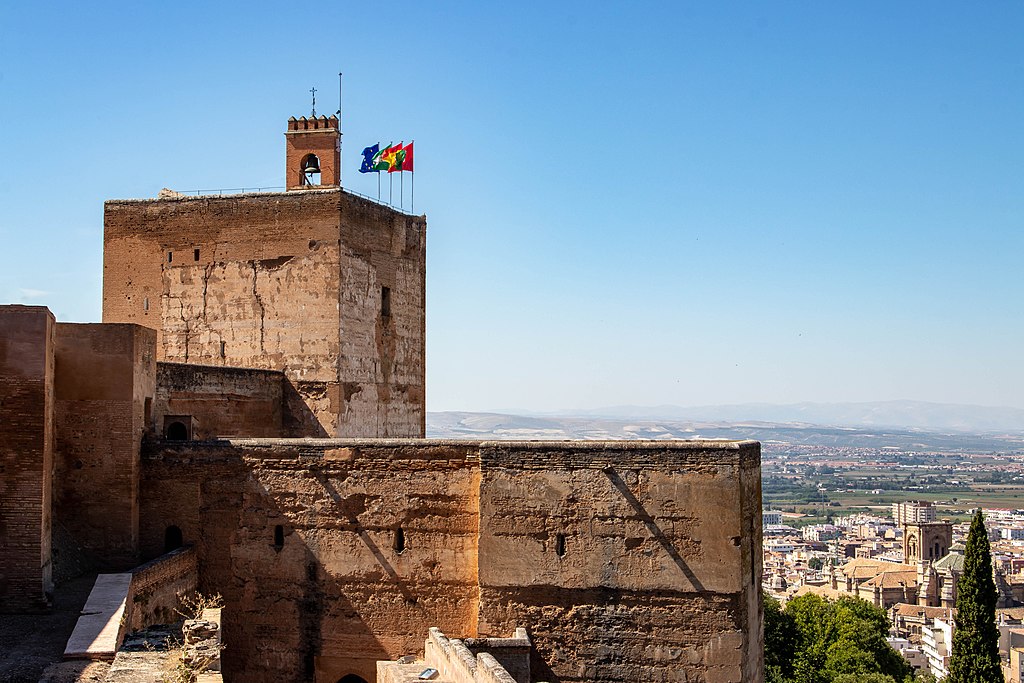
Torre de la Vela
Muhammad Ibn al-Ahmar had auburn hair, a fiery temper, and the political instincts of a snake. In 1238, this 26-year-old survivor gazed across Granada's landscape and made a calculation that would keep his dynasty alive for 254 years while every other Muslim kingdom in Spain crumbled to dust.
Standing on this very spot, Muhammad I, known as "the Red," rejected the obvious choice of the old Albaicín citadel where his predecessors had ruled. Too exposed, too close to the Christian frontier, too obvious. Instead, he chose this isolated hill called Sabika, surrounded by ravines and blessed with mountain water from the Sierra Nevada. The location screamed defensibility, but Muhammad's real genius lay in understanding that military strength alone wouldn't save his kingdom.
While other Muslim rulers died heroically in hopeless battles against Christian armies, Muhammad chose survival over glory. He became a tributary vassal to King Ferdinand III of Castile, agreeing to pay annual tribute and even provide troops for Christian campaigns against other Muslim cities. His own people called him a traitor. History would prove him a visionary.
The Torre de la Vela, this 25-meter watchtower, became the symbol of his pragmatic defiance. From its heights, guards could spot approaching armies from any direction, but Muhammad wasn't just watching for enemies. He was monitoring the stream of Muslim refugees flowing into Granada from fallen cities like Seville, Córdoba, and Valencia. Each wave of displaced artisans, scholars, poets, and merchants enriched his kingdom while weakening his Christian overlords.
Muhammad's strategy was brilliant in its cynicism. Pay tribute with one hand while building strength with the other. Welcome the best minds and skills from across Al-Andalus while Christian kingdoms celebrated their "victories" by expelling exactly the people who had made those cities prosperous. Granada became a concentrated essence of Islamic Spanish civilization, growing stronger as its enemies grew weaker through their own success.
The red earth beneath your feet, which gave Muhammad his nickname and the fortress its name Al-Hambra, absorbed the sweat of workers who understood they were building more than fortifications. They were constructing a time capsule, a place where Islamic Spanish culture could survive and flourish while the rest of the peninsula transformed around them.
When Christian armies finally arrived at these gates in 1492, they found not a desperate last holdout but a sophisticated civilization that had perfected the art of existence under impossible circumstances. The bells that now crown this tower, installed by the conquering Catholics, ring out across a city that had outlasted them all through the simple recognition that sometimes the smartest fight is the one you refuse to have.
Muhammad I died in 1273, but his red fortress had become something far greater than a military installation. It had become proof that pragmatism, properly applied, could be its own form of heroism.
Listen to the audio guide: