São Bento Railway Station
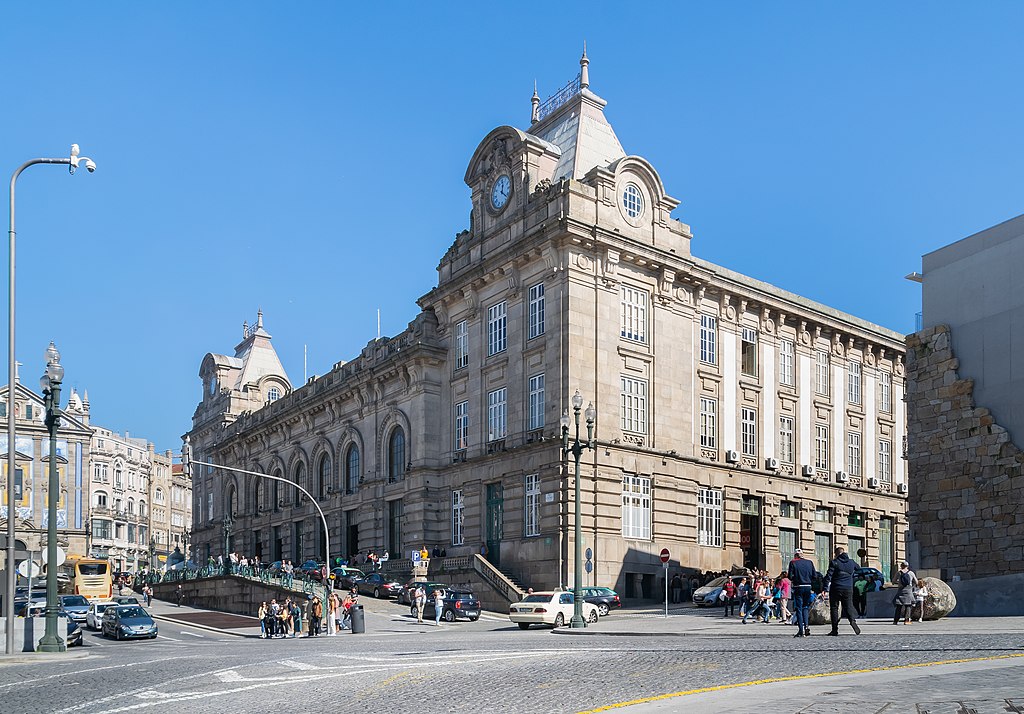
This imposing granite facade you're admiring? It's Portugal playing dress-up in French architectural sophistication, and frankly, it pulls it off better than most actual French buildings. José Marques da Silva designed this beauty between 1903-1916 after studying under Victor Laloux at the École des Beaux-Arts in Paris—the same guy who designed the Gare d'Orsay that's now the Musée d'Orsay. Talk about impressive credentials.
The irony here is delicious: you're standing on ground that housed Benedictine monks for nearly 400 years. The Convent of São Bento da Avé Maria, built by King Manuel I in 1518, occupied this exact spot until 1892 when the last nun died and everyone decided trains were more useful than prayers. The demolition happened that same year—Portuguese efficiency at its finest.
Notice those perfectly symmetrical proportions and that mansard roof? That's pure French Beaux-Arts architecture, emphasizing grandeur and civic importance. The three-story design with its U-shaped configuration creates an impressive courtyard effect that makes you feel appropriately small and important at the same time. The granite construction, sourced from local quarries, connects this European-inspired design to Porto's geological DNA.
But here's where it gets interesting: building this required drilling three tunnels through Porto's hills to connect the city center with Campanhã station. Completed in 1893, this was serious 19th-century engineering ambition. When King Carlos I laid the cornerstone in 1900, he was essentially betting that Portugal could pull off something spectacular. Thirteen years and countless bureaucratic headaches later, they proved him right.
The construction drama was worthy of a soap opera. Silva got fired from his own project in 1909 due to delays, though thankfully his architectural vision survived the management shuffle. The station finally opened on October 5, 1916, transforming a religious site into a temple of modern transportation.
Today, this serves as the western terminus for the scenic Douro railway line and the main hub for regional trains heading north. The metro system runs underneath your feet—São Bento Metro station on Line D—proving that this early 20th-century vision continues serving contemporary urban mobility needs.
What you're witnessing is architectural diplomacy: Portugal embracing French sophistication while maintaining distinctly Portuguese elements. The result? A building that honors both international artistic movements and local materials, creating something that belongs entirely to Porto while speaking a universal language of civic pride and transportation excellence.
Listen to the audio guide: