Aqueduto da Usseira - The Queen Who Actually Spent Her Own Money
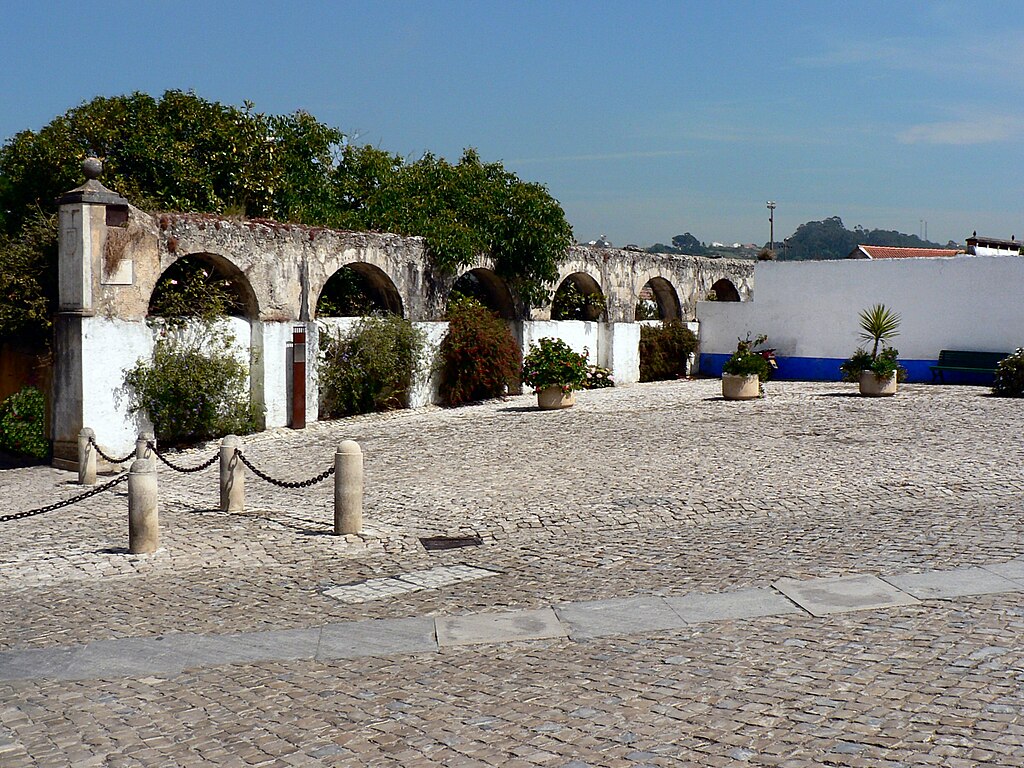
Your first glimpse of Óbidos isn't the famous walls or castle—it's this 3-kilometer limestone monument to one queen's personal obsession with clean water. Queen Catherine of Austria built the Aqueduto da Usseira around 1575, and here's the kicker: she sold her own lands to finance it. While most royal "improvements" meant taxing peasants until they bled, Catherine literally bought water rights for an entire town with her personal fortune.
This wasn't vanity architecture. Medieval Óbidos had a serious water problem. The town sits on a hilltop, and wells frequently ran dry during summer months. Catherine's solution involved hauling water across 3 kilometers of Portuguese countryside through 127 limestone arches, each one calculated to maintain perfect hydraulic flow. The woman essentially built Portugal's most expensive medieval plumbing system because she was tired of her royal residence smelling like unwashed courtiers.
The engineering here deserves serious respect. Each arch was constructed using dry-stone techniques—no mortar, just physics and Portuguese stubbornness. The builders relied on precisely cut limestone blocks that lock together through compression and weight distribution. It's essentially a 500-year-old demonstration that medieval Portuguese engineers understood structural mechanics better than most modern contractors who need computer modeling to build a parking garage.
The aqueduct survived the 1755 earthquake that flattened half of Portugal, including most of Lisbon. While Pombal was rebuilding the capital from scratch, Óbidos still had running water courtesy of Catherine's limestone channels. The tremor that demolished palaces and churches couldn't shake loose stones that had been fitted together with 16th-century precision.
Walking alongside these arches today, you're following Catherine's exact specifications. The gradient maintains a steady 2% decline over the entire route, ensuring water flows consistently without stagnating or rushing too quickly. Medieval hydraulic engineering required calculating elevation changes, accounting for seasonal weather variations, and predicting structural settlement—all without computerized surveying equipment.
The water source originates at Usseira spring, 5 kilometers northeast of Óbidos. Catherine's engineers dug underground channels through solid rock, then elevated the flow above ground level to prevent contamination from surface runoff. The covered channel sections protected water quality while the exposed arches allowed for maintenance access and pressure regulation.
Catherine's investment proved its worth repeatedly. During siege situations, access to clean water meant survival. During peaceful periods, abundant water supplies supported population growth, agricultural expansion, and basic sanitation. The queen who funded this project essentially guaranteed Óbidos would remain viable as a settlement for centuries beyond her lifetime.
The aqueduct still functions today, supplying water to Óbidos fountains and demonstrating that 16th-century Portuguese infrastructure planning had longer-term vision than most contemporary municipal projects. Modern city planners struggle to build systems lasting 50 years; Catherine built one that's approaching its 500th anniversary while still performing its original function.
Earlier rulers focused on walls, weapons, and defensive positions. Catherine understood that sustainable prosperity required clean water, reliable food supplies, and livable urban conditions. Her aqueduct marked the transition from fortress thinking to city planning—from surviving attack to thriving in peacetime.
Listen to the audio guide: