Bolhão Market Exterior
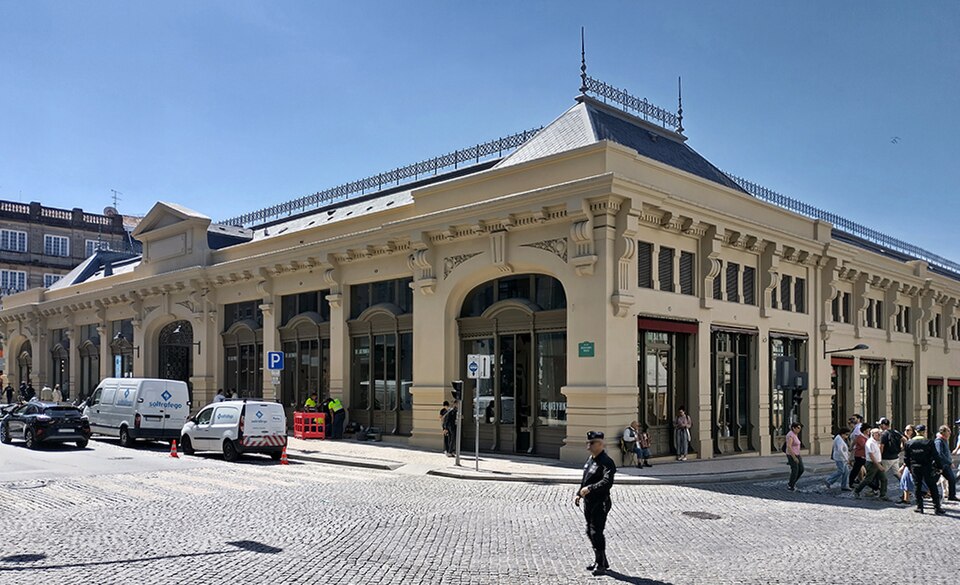
That golden sandstone facade you're admiring? It's been watching Porto change for over a century, and frankly, it's seen some things. Built between 1914 and 1920 by architect António Correia da Silva, this neoclassical beauty sits exactly where medieval merchants once sold produce around natural water springs - those little bubbles in the ground gave this place its name, "bolhão" meaning large bubble.
The timing of its construction tells you everything about Porto's ambitions. While Europe was tearing itself apart in World War One, this city was building monuments to commerce. That's Portuguese pragmatism for you - when others fight, we trade. The market opened just as Porto was cementing its reputation as Portugal's economic powerhouse, handling everything from Brazilian coffee to Asian spices flowing through the empire's Atlantic networks.
Look at those cast-iron windows and that perfectly proportioned entrance - this isn't just functional architecture, it's a statement. The Beaux-Arts style announces that Porto wasn't some provincial backwater, but a cosmopolitan trading hub that could build with the best of them. Those slate roofs you see weren't cheap either - they're made from northern Portuguese stone that's weathered Atlantic storms for generations.
The market survived the 1910 Republican revolution, two world wars, Salazar's dictatorship, and the 1974 Carnation Revolution. But by 2018, it was facing its greatest enemy: modernity. Food safety regulations, changing shopping habits, and a crumbling infrastructure finally forced the unthinkable - closure.
Here's where the story gets interesting. Instead of demolishing this "outdated" building like so many European cities did with their markets, Porto chose the harder path. Twenty-eight million euros later, mostly from European Union funds, they've created something remarkable - a market that's genuinely modern while looking exactly as it did in 1920.
The renovation required 953 meetings with vendors, because apparently getting Portuguese merchants to agree on anything takes approximately forever. But those meetings mattered. They ensured that Teresa das Azeitonas, whose family has sold olives here for five generations, could continue her business alongside wine bars that serve €15 glasses to tourists.
What you can't see from out here is the underground revolution - cold storage facilities, ten elevators, and even a direct metro connection. They've managed to drag a century-old market into the 21st century without destroying what made it special in the first place.
The result? A market that serves 20,000 visitors daily while maintaining its role as northern Portugal's produce hub. Local grandmothers still come for their daily shopping, but now they share space with food tourists and Instagram photographers. It's commercialization done right - preserving authenticity while adapting to reality.
This building represents something bigger than just a market. It's proof that cities don't have to choose between heritage and progress, between authenticity and economic viability. Sometimes the most radical thing you can do is preserve what works while making it work better.
Stand here for a moment and appreciate what you're seeing - a 104-year-old building that just spent four years in intensive care and emerged stronger than ever. The phoenix metaphor is overused, but sometimes clichés exist because they're true.
Listen to the audio guide: