The Fortress of Faith (exterior facade)
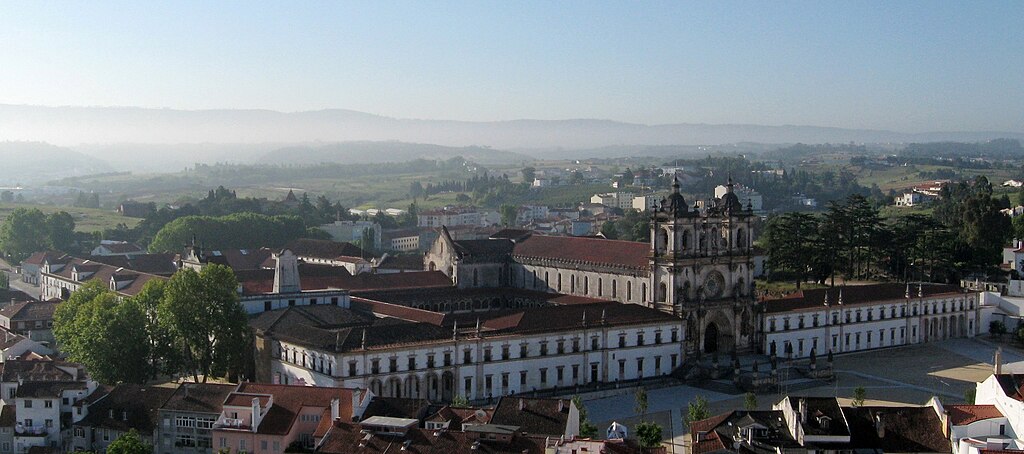
Portugal's first Gothic building stands before you, and it's already lying to your face. Those delicate limestone arches and refined proportions? Pure Cistercian restraint. Those fortress-like crenellations crowning the roofline? Medieval Portugal reminding you that even monks needed to be ready for a fight.
King Afonso Henriques founded this place in 1153 after crushing the Moors at Santarém. His gratitude took the form of handing over vast territories to French monks who'd never seen a battlefield but sure knew how to build. The Cistercians arrived with their rulebook: no decorations, no distractions, no nonsense. What they created was architectural poetry disguised as religious pragmatism.
Those Baroque bell towers flanking the entrance? Complete 18th-century additions, because apparently Portuguese taste eventually decided that Cistercian austerity was about as appealing as week-old bread. The original designers would have been horrified. Saint Bernard of Clairvaux, the Cistercian founder, once wrote a scathing letter about decorative church elements, calling them "ridiculous monsters" that distracted from prayer.
Yet here we are, seven centuries later, drawn not by religious devotion but by a love story so scandalous it made medieval chroniclers blush. Pedro I chose this sacred space as the final resting place for his murdered mistress, whom he posthumously declared Queen of Portugal. The audacity is breathtaking - imagine burying your forbidden lover among the most revered saints in the kingdom and daring anyone to object.
The monks who built this place followed the Rule of Saint Benedict: poverty, chastity, obedience. By 1300, they owned half the surrounding region and had become the richest monastery in Portugal. So much for poverty. As for chastity, well, they'd soon be hosting the most famous love affair in Portuguese history.
Eight flying buttresses support the apse - Portugal's first experiment with this Gothic innovation that would reshape European architecture. The Cistercians imported French engineering along with French sensibilities, creating something that managed to be both spiritually transcendent and politically shrewd.
Here's what the guidebooks won't tell you: this monastery was as much diplomatic chess move as spiritual foundation. Afonso Henriques needed papal recognition for Portuguese independence, and founding a monastery for the influential Cistercian order was pure political theater. The monks got their Portuguese empire; Afonso got his legitimacy.
Inside these walls, nearly 1,000 monks once lived according to rigid schedules that would make modern productivity gurus weep with envy. They rose at 2 AM for prayers, worked the fields, copied manuscripts, and maintained one of medieval Europe's most sophisticated hydraulic systems. The dissolution of the monasteries in 1834 ended almost 700 years of this remarkably successful spiritual-industrial complex.
But before we meet those tragic lovers whose tombs transformed this place from monastery to pilgrimage site, take a moment to appreciate the sheer audacity of medieval engineering. Those limestone blocks were quarried locally, shaped by hand, and assembled without modern machinery into something that has withstood seven centuries of wars, earthquakes, and French soldiers trying to loot royal tombs.
The Cistercians believed that beauty should serve spirituality, not distract from it. They succeeded beyond their wildest dreams - and created the perfect setting for a love story that would outlast every political dynasty that built it.
Listen to the audio guide: