Exterior Overview
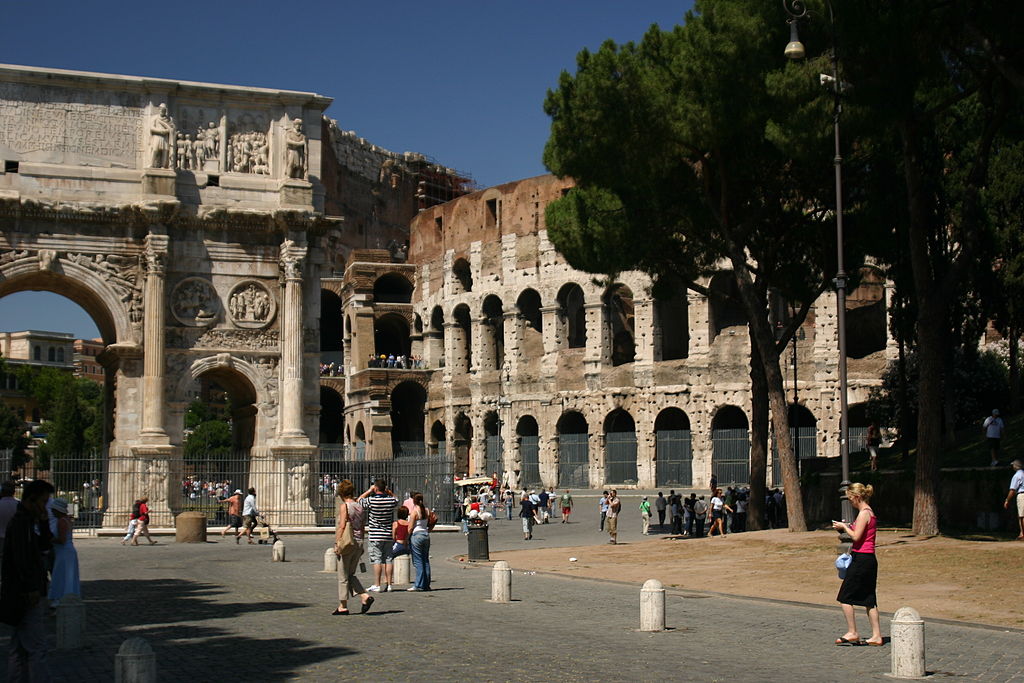
That massive stone oval looming before you? It's the world's most expensive guilt offering. Emperor Vespasian built the Colosseum using treasure looted directly from Jerusalem's Temple after crushing the Jewish revolt in 70 AD. Between 60,000 and 100,000 Jewish slaves hauled every block of travertine limestone you see here—a bitter irony that Romans never bothered mentioning in their tourism brochures.
But here's the political genius: Vespasian deliberately built this monument over Nero's hated private lake. Where the previous emperor had created an exclusive playground for himself, the new dynasty offered "public" entertainment for the masses. Nothing says "I'm not like that other guy" quite like turning a tyrant's bathtub into the people's arena.
Those four perfectly stacked levels showcase Roman architectural orders in textbook sequence: Tuscan columns supporting the ground floor, Ionic holding up the second, Corinthian decorating the third, and flat panels crowning the fourth that were once inlaid with bronze shields and precious stones. Each of the 80 arches per level measures exactly 4.2 meters wide by 7.05 meters tall—Roman standardization that would make modern architects weep with envy.
Notice those triangular brick patches on the north wall? Those aren't Roman at all—they're desperate 1807 repairs by Italian engineers who couldn't figure out how to match Roman concrete. Even Napoleon's experts struggled with technology that was already ancient when their grandfathers were born.
The scale hits differently when you realize this thing seated over 50,000 people and could evacuate them all in three minutes flat. Those 80 numbered entrances functioned like a modern subway system—each Roman citizen received a pottery ticket specifying exactly which arch to enter and where to sit. The crowd management was so efficient that some modern stadiums still can't match it.
But the real story isn't the engineering—it's the psychology. This building was designed to make you feel simultaneously awed and insignificant. Standing here, looking up at those four massive stories, you're experiencing exactly what Romans intended: the overwhelming power of the empire made manifest in stone.
The Colosseum survived earthquakes that leveled half of Rome, Renaissance popes who used it as a quarry for St. Peter's Basilica, and medieval Romans who turned it into luxury apartments. Why? Because Roman concrete actually gets stronger over time, thanks to volcanic ash that continues reacting with moisture for centuries. Modern concrete crumbles after 50 years. Roman concrete laughs at your puny modern chemistry.
So before we head inside to explore the machinery of spectacle, take a moment to appreciate what you're really looking at: the world's most successful piece of imperial propaganda, built by slaves to entertain citizens and impress visitors for over 400 years. It worked so well that tourists are still showing up 2,000 years later, proving that Romans understood one fundamental truth about human nature—we'll always pay to see a good show.
Listen to the audio guide: